
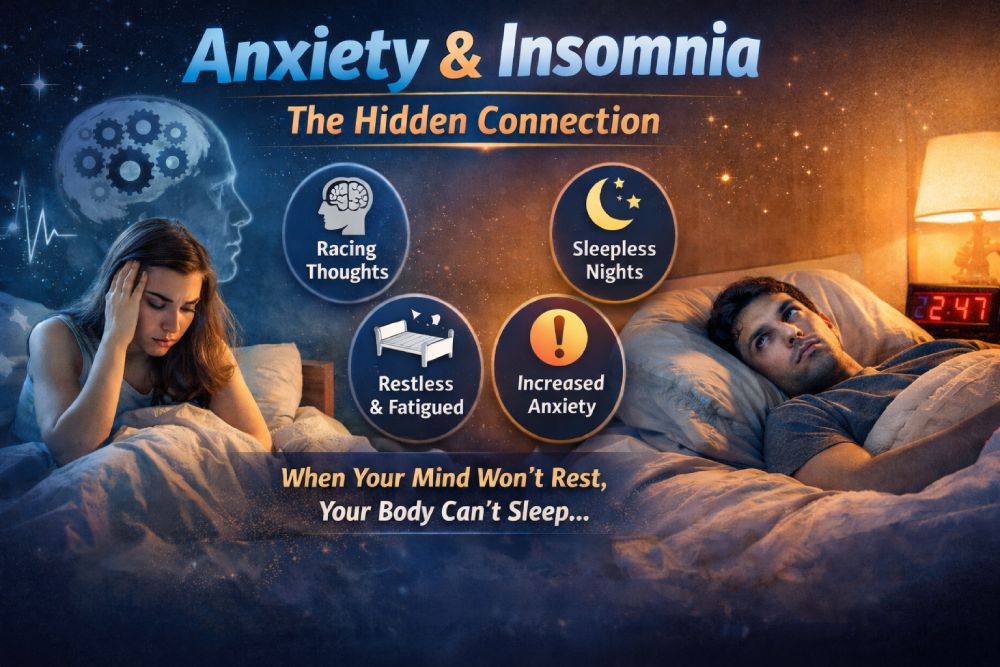
Have you ever found yourself lying awake at night, replaying worries in your head, only to feel exhausted and anxious the next day? You’re not alone. Anxiety and insomnia are two of the most common mental health challenges today—and more often than not, they walk hand in hand.
Mental health experts at the Best Rehabilitation Center in Delhi often see patients who come in for sleep problems, only to discover that anxiety is silently fueling the issue. Likewise, people seeking help from the Best Psychiatrist in Delhi or Best Psychologist in Delhi frequently report long-standing sleep disturbances alongside emotional distress.
So, what’s the real connection between anxiety and insomnia? Let’s understand it in a simple, human way.
What Is Insomnia?
Insomnia isn’t just about “not sleeping enough.” It’s about not getting restful, quality sleep, even when you desperately want it.
People experiencing insomnia often struggle with:
- Difficulty falling asleep despite feeling tired
- Waking up repeatedly during the night
- Waking up too early and being unable to fall back asleep
- Feeling exhausted, irritated, or mentally foggy in the morning
Doctors specializing in insomnia treatment explain that poor sleep doesn’t just affect energy levels—it impacts mood, concentration, emotional balance, and overall mental health.
What Is Anxiety?
Anxiety is your body’s natural response to stress—but when it becomes constant, overwhelming, or uncontrollable, it turns into a serious concern.
Anxiety may feel like:
- Constant worrying or overthinking
- A racing mind that won’t slow down
- Fear about the future without a clear reason
- Restlessness, irritability, or physical tension
When left untreated, anxiety disorders can last for months or even years, deeply affecting daily life, relationships, work, and sleep.
How Anxiety and Insomnia Feed Each Other
Anxiety and insomnia are closely connected in a vicious cycle:
- Anxiety keeps your mind alert, making it hard to relax and fall asleep
- Lack of sleep weakens emotional control, making anxiety feel even worse
- Over time, people begin to fear bedtime itself, worrying they won’t sleep
- This fear creates more anxiety, which further disrupts sleep
Mental health professionals agree that either condition can come first—but if both are ignored, they can seriously affect your mental and physical well-being.
That’s why early support from the Best Psychiatrist in Delhi or Best Psychologist in Delhi is crucial when symptoms persist.
Treating Anxiety and Insomnia the Right Way
While temporary relief may come from over-the-counter sleep aids or calming pills, long-term healing requires expert guidance.
Effective treatment often includes:
- Psychological therapies to manage anxious thoughts
- Relaxation and stress-management techniques
- Lifestyle and sleep-routine corrections
- Medical support when required
- Holistic care for underlying emotional or behavioral triggers
For individuals also struggling with substance dependence alongside anxiety or sleep issues, a trusted De Addiction Center in Delhi can provide integrated care, addressing both mental health and recovery together.
Why Choose World Brain Center?
At World Brain Center, patients receive compassionate, personalized care focused on long-term recovery—not just symptom control. With a team of experienced psychiatrists, psychologists, and rehabilitation specialists, the center is recognized as one of the Best Rehabilitation Centers in Delhi for anxiety, insomnia, and related mental health concerns.
If anxiety is stealing your peace or sleepless nights are draining your life, reaching out today can be the first step toward healing.
Frequently Asked Questions (FAQs)
1. Can anxiety really cause long-term insomnia?
Yes. Chronic anxiety keeps the brain in a constant state of alertness, making it difficult to fall or stay asleep. Over time, this can develop into long-term insomnia if not treated.
2. Should I see a psychiatrist or psychologist for anxiety and insomnia?
Both play important roles. A Best Psychiatrist in Delhi can help with medical evaluation and treatment, while a Best Psychologist in Delhi focuses on therapy and behavioral techniques. Often, a combined approach works best.
3. Can insomnia increase anxiety even if I wasn’t anxious before?
Absolutely. Ongoing sleep deprivation affects emotional regulation, making people more prone to stress, fear, and anxiety—even if they didn’t experience it earlier.
4. How does a rehabilitation or de-addiction center help with anxiety and sleep disorders?
A De Addiction Center in Delhi or rehabilitation center provides structured care, therapy, lifestyle correction, and emotional support—especially helpful when anxiety, insomnia, and substance use are interconnected.

