
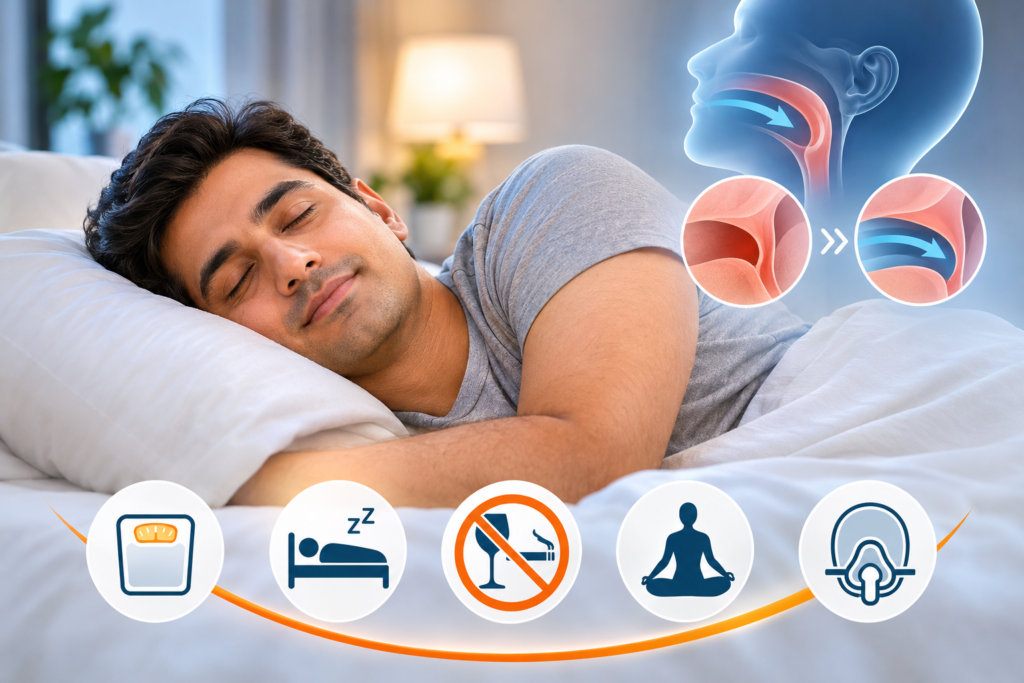
Sleep Apnea Treatment at Home: Practical Ways to Breathe Better and Sleep Peacefully
Waking up tired despite spending seven to eight hours in bed can be frustrating. You may experience morning headaches, daytime sleepiness, difficulty concentrating, or a constant feeling of exhaustion. Sometimes, your family members may notice loud snoring, interrupted breathing, or sudden gasping sounds while you sleep.
These symptoms may indicate a sleep-related breathing condition called Sleep Apnea.
Sleep apnea is more than just a problem with snoring. It can repeatedly interrupt normal breathing during sleep, affecting oxygen levels, sleep quality, daytime functioning, and overall health.
The good news is that certain lifestyle changes and supportive measures can help manage sleep apnea symptoms at home. Maintaining a healthy weight, changing sleeping positions, avoiding alcohol before bedtime, and following a consistent sleep routine can make a difference.
However, it is equally important to understand that home remedies alone cannot reliably treat moderate or severe sleep apnea. Proper diagnosis and medically recommended treatment are essential for long-term management.
In this guide, we explore practical ways to manage sleep apnea at home, understand available treatment options, and recognize when professional medical support is necessary.
1. What Is Sleep Apnea?
Sleep apnea is a sleep-related breathing disorder in which breathing repeatedly stops or becomes shallow during sleep.
These interruptions may last several seconds and can occur many times throughout the night. As a result, the brain may briefly wake the person to restore normal breathing, even if they do not remember waking up.
The most common form is Obstructive Sleep Apnea (OSA).
It occurs when the muscles supporting the soft tissues in the throat relax during sleep, causing the upper airway to narrow or become temporarily blocked.
There are three main types of sleep apnea:
Obstructive Sleep Apnea (OSA): Occurs when the upper airway becomes partially or completely blocked during sleep.
Central Sleep Apnea (CSA): Happens when the brain does not consistently send the appropriate signals to the muscles responsible for breathing.
Complex Sleep Apnea: Also called treatment-emergent central sleep apnea, this involves central breathing interruptions that emerge or persist during treatment for obstructive sleep apnea.
Understanding the type and severity of sleep apnea is important because treatment differs from person to person.
2. Common Symptoms of Sleep Apnea
Sleep apnea can remain unnoticed for a long time because most symptoms occur while a person is sleeping.
In many cases, family members or sleeping partners are the first to notice unusual breathing patterns.
Common symptoms include:
- Loud and persistent snoring
- Pauses in breathing during sleep
- Gasping, choking, or snorting sounds at night
- Frequent waking during sleep
- Excessive daytime sleepiness
- Morning headaches
- Dry mouth or sore throat after waking
- Difficulty concentrating
- Irritability and mood changes
- Reduced energy and productivity
Some individuals may also experience memory difficulties, reduced alertness, and difficulty managing everyday responsibilities.
If these symptoms occur regularly, consulting a healthcare professional is important.
Untreated sleep apnea may increase the risk of complications such as high blood pressure, cardiovascular problems, and impaired daytime functioning.
3. Can Sleep Apnea Be Treated at Home?
Yes, certain aspects of sleep apnea management can be supported through home-based lifestyle changes.
However, the effectiveness depends on the type, underlying cause, and severity of the condition.
For individuals with mild obstructive sleep apnea, lifestyle modifications may improve symptoms. People with moderate or severe sleep apnea generally require additional medical treatment, such as Positive Airway Pressure (PAP) therapy.
Some useful home-based approaches include:
- Maintaining a healthy body weight
- Sleeping on your side
- Avoiding alcohol before bedtime
- Stopping smoking
- Following a regular sleep schedule
- Managing nasal congestion
- Using prescribed CPAP equipment consistently
- Maintaining a comfortable sleeping environment
These measures should complement, rather than replace, clinically recommended treatment.
4. Effective Lifestyle Changes for Sleep Apnea
Small and consistent lifestyle changes can contribute to better sleep and help manage obstructive sleep apnea.
A. Maintain a Healthy Body Weight
Excess body weight, particularly around the neck and upper airway, can contribute to airway narrowing during sleep.
For individuals who are overweight, gradual and sustainable weight management may help reduce the severity of obstructive sleep apnea.
Consider:
- Eating balanced and nutritious meals
- Including vegetables, fruits, and whole grains
- Limiting highly processed foods
- Maintaining regular physical activity
- Avoiding excessive late-night eating
- Following a realistic weight-management plan
Weight loss does not guarantee that sleep apnea will disappear. Medical reassessment remains important even after significant weight changes.
B. Change Your Sleeping Position
Your sleeping position can influence how easily air passes through your upper airway.
Sleeping flat on your back may allow the tongue and surrounding soft tissues to move backward, narrowing the airway in some individuals.
Sleeping on your side may help reduce breathing interruptions, particularly in people with position-dependent obstructive sleep apnea.
You can try:
- Using a comfortable side-sleeping pillow
- Keeping your neck properly supported
- Using a body pillow to maintain your sleeping position
- Avoiding prolonged sleeping on your back if advised
Remember that positional therapy may not work equally well for everyone.
C. Avoid Alcohol Before Bedtime
Alcohol can relax the muscles in the upper airway, potentially making breathing interruptions more frequent or severe.
It may also interfere with normal sleep patterns.
If you experience sleep apnea symptoms, avoiding alcohol, particularly close to bedtime, is an important precaution.
Also, do not take sleeping pills or sedative medicines without medical advice, as some may worsen sleep-related breathing problems.
D. Stop Smoking
Smoking can irritate the respiratory tract and contribute to inflammation in the upper airway.
This may worsen nasal congestion and breathing difficulties during sleep.
Quitting smoking supports respiratory health and can form an important part of a comprehensive sleep apnea management plan.
If nicotine dependence makes quitting difficult, professional de-addiction counselling and medical support may help.
E. Include Regular Physical Activity
Regular exercise supports cardiovascular health, weight management, and overall sleep quality.
Suitable activities may include:
- Walking
- Cycling
- Swimming
- Light jogging
- Yoga
- Stretching exercises
Start gradually according to your fitness level and medical condition.
Although physical activity can support sleep apnea management, it should not be considered a replacement for CPAP or other prescribed treatments.
5. Home Remedies and Practical Sleep Management Techniques
Apart from lifestyle changes, certain practical measures can help improve nighttime comfort and support better sleep.
A. Use a Humidifier When Needed
Dry air can irritate the nose and throat, particularly for individuals who experience nasal dryness while using CPAP equipment.
A humidifier may help maintain comfortable moisture levels in the bedroom.
Some useful precautions include:
- Clean the humidifier regularly
- Follow the manufacturer’s maintenance instructions
- Use suitable water as recommended
- Avoid excessive humidity
- Keep the surrounding sleeping area clean
A humidifier may improve comfort, but it does not treat the airway obstruction responsible for sleep apnea.
B. Make Your CPAP Therapy More Comfortable
Continuous Positive Airway Pressure (CPAP) therapy is one of the most commonly prescribed treatments for obstructive sleep apnea.
The machine delivers a controlled flow of air through a mask worn over the nose or nose and mouth. This pressure helps keep the airway open during sleep.
Some individuals initially find CPAP uncomfortable, but the right adjustments can make regular use easier.
Try these measures:
- Choose a properly fitted mask
- Adjust the headgear according to professional guidance
- Keep the mask and tubing clean
- Use prescribed humidification if needed
- Discuss nasal dryness or congestion with your healthcare provider
- Contact your provider if you experience air leakage or discomfort
Do not independently change prescribed pressure settings.
Consistent CPAP use is important. If you are struggling with the equipment, seek professional assistance instead of discontinuing treatment.
C. Reduce Bedroom Allergens
Dust mites, pollen, pet dander, and other airborne allergens can contribute to nasal irritation and congestion.
A cleaner sleeping environment may make nighttime breathing more comfortable.
Consider:
- Washing bedsheets regularly
- Cleaning pillow covers
- Vacuuming bedroom floors
- Reducing dust accumulation
- Keeping pets away from the bed if they trigger allergies
- Maintaining proper ventilation
If nasal congestion persists, consult a healthcare professional to identify its underlying cause.
D. Maintain a Regular Sleep Schedule
Going to bed and waking up at consistent times helps support the body’s natural sleep-wake cycle.
Although a regular sleep schedule does not directly remove airway obstruction, it can improve overall sleep habits and reduce the effects of insufficient sleep.
For better sleep hygiene:
- Maintain consistent sleeping hours
- Keep your bedroom dark and quiet
- Avoid excessive screen time before bedtime
- Limit caffeine late in the day
- Avoid heavy meals close to bedtime
- Make time for relaxation before sleeping
E. Practice Singing and Oral Muscle Exercises
Certain exercises involving the tongue, lips, throat, and facial muscles are being studied as supportive approaches for obstructive sleep apnea.
Oropharyngeal exercises, sometimes called myofunctional therapy, aim to improve the function and coordination of muscles involved in maintaining an open airway.
Singing and playing certain wind instruments may also engage some of these muscles.
However, evidence varies, and these activities should not be presented as a proven standalone treatment.
If you are considering such exercises, discuss their suitability with a healthcare professional.
6. Oral Appliances and At-Home Devices
Certain oral appliances can help keep the upper airway open during sleep.
They are generally considered for selected patients with obstructive sleep apnea, depending on the severity and individual requirements.
Two commonly used options include:
A. Mandibular Advancement Devices (MADs)
These devices hold the lower jaw slightly forward during sleep.
This helps prevent the jaw and tongue from moving backward and narrowing the upper airway.
A custom-fitted mandibular advancement device may be recommended for selected individuals, particularly those with mild to moderate obstructive sleep apnea or those who cannot tolerate CPAP.
B. Tongue-Retaining Devices (TRDs)
Tongue-retaining devices use gentle suction to hold the tongue in a forward position.
This may help prevent the tongue from falling backward and obstructing the airway.
These devices are less commonly used and may not be suitable for everyone.
Important: Oral appliances should be selected and fitted under professional guidance. Poorly fitted devices can cause jaw discomfort, dental problems, or other complications.
Do not purchase an unverified mouthpiece and assume that it will treat sleep apnea effectively.
7. When Home Treatment Is Not Enough
Home-based measures can support sleep health, but they cannot reliably manage every case of sleep apnea.
Ignoring persistent symptoms may delay appropriate treatment.
You should seek professional evaluation if you notice:
- Loud and persistent snoring
- Repeated pauses in breathing
- Gasping or choking during sleep
- Severe daytime sleepiness
- Frequent morning headaches
- Difficulty concentrating
- Persistent fatigue despite adequate sleep
- High blood pressure along with suspected sleep apnea
- Symptoms that continue despite lifestyle changes
Excessive daytime sleepiness can also increase the risk of road and workplace accidents. Avoid driving or operating machinery when you feel drowsy.
If someone experiences severe breathing difficulty, chest pain, or other acute symptoms, seek emergency medical attention.
8. How Is Sleep Apnea Diagnosed?
Accurate diagnosis is essential before deciding which treatment is appropriate.
A healthcare professional may evaluate:
- Your sleep history
- Snoring patterns
- Daytime sleepiness
- Medical history
- Body weight and relevant physical findings
- Existing medications
- Other underlying health conditions
Depending on the assessment, a sleep study may be recommended.
Polysomnography (Sleep Study)
An overnight sleep study records different body functions during sleep, including breathing patterns, oxygen levels, heart rate, and brain activity.
It helps determine whether sleep apnea is present and assess its severity.
Home Sleep Apnea Testing
For selected adults with a high likelihood of uncomplicated obstructive sleep apnea, a healthcare professional may recommend a home sleep apnea test.
It records relevant breathing and oxygen measurements while the individual sleeps at home.
A home test is not suitable for everyone. If the results are negative or inconclusive despite persistent symptoms, an in-laboratory sleep study may be required.
The diagnosis helps determine whether lifestyle changes, CPAP therapy, oral appliances, or other medical interventions are appropriate.
9. Getting Professional Help at World Brain Center Hospital
Persistent sleep problems can affect much more than your energy levels. Poor sleep may influence mood, concentration, emotional well-being, relationships, and everyday productivity.
At World Brain Center Hospital, we understand the importance of addressing mental and behavioural health concerns through appropriate professional assessment and personalized care.
If you or someone in your family is experiencing persistent sleep disturbances, excessive daytime sleepiness, anxiety, or related psychological concerns, seeking professional guidance is an important first step.
Our approach emphasizes:
- Individualized assessment
- Professional psychiatric consultation
- Psychological evaluation when appropriate
- Sleep-related mental health concerns
- Anxiety and stress management
- Behavioural counselling
- Support for associated mental health conditions
For suspected obstructive sleep apnea, an appropriate medical or sleep specialist evaluation is essential. Patients may require referral for a sleep study and respiratory treatment depending on their clinical needs.
Your Sleep Matters. Do Not Ignore the Warning Signs.
Sleeping well is essential for maintaining physical health, emotional balance, and a productive daily routine.
If you regularly wake up exhausted, experience loud snoring, or notice breathing interruptions during sleep, do not dismiss these symptoms as ordinary tiredness.
Early evaluation can help identify the problem and guide you toward appropriate treatment.
World Brain Center Hospital is committed to supporting individuals and families through compassionate and professional mental healthcare.
Contact World Brain Center Hospital
Hospital: World Brain Center Hospital
Phone: 011-41643347
Mobile: 9968788861, 9968788865, 9968788867
Reach out to our team to enquire about professional consultation and appropriate guidance for sleep-related concerns.
Frequently Asked Questions (FAQs)
1. Can sleep apnea be treated naturally at home?
Certain lifestyle changes, such as maintaining a healthy weight, sleeping on your side, avoiding alcohol before bedtime, quitting smoking, and following a regular sleep schedule, may help improve mild obstructive sleep apnea. However, these measures cannot replace prescribed medical treatment, particularly in moderate or severe cases.
2. What is the best sleeping position for someone with sleep apnea?
Sleeping on your side may help reduce airway obstruction, especially in people whose sleep apnea becomes worse when lying on their backs. However, sleeping position alone may not adequately control the condition. A healthcare professional can determine whether positional therapy is appropriate.
3. Can sleep apnea go away without treatment?
Sleep apnea should not be expected to disappear on its own. Symptoms may improve with weight management and other lifestyle changes in some individuals, but airway obstruction can persist. Proper diagnosis and follow-up are important to determine whether treatment is still required.
4. Is CPAP necessary for treating sleep apnea?
CPAP is a commonly prescribed and effective treatment, particularly for moderate to severe obstructive sleep apnea. However, treatment depends on the type and severity of the condition. Selected patients may benefit from custom oral appliances, positional therapy, or other medical interventions. A specialist should recommend the most appropriate option.
Medical Disclaimer
This article is intended for general health education and awareness. It does not replace professional medical consultation, diagnosis, or treatment. Sleep apnea can vary in type and severity, and treatment outcomes differ between individuals. Do not discontinue prescribed CPAP therapy or change medical treatment without consulting your healthcare provider.
If you or a family member experiences persistent snoring, breathing interruptions during sleep, or excessive daytime sleepiness, seek an appropriate medical evaluation. World Brain Center Hospital encourages timely professional consultation and responsible mental healthcare.