
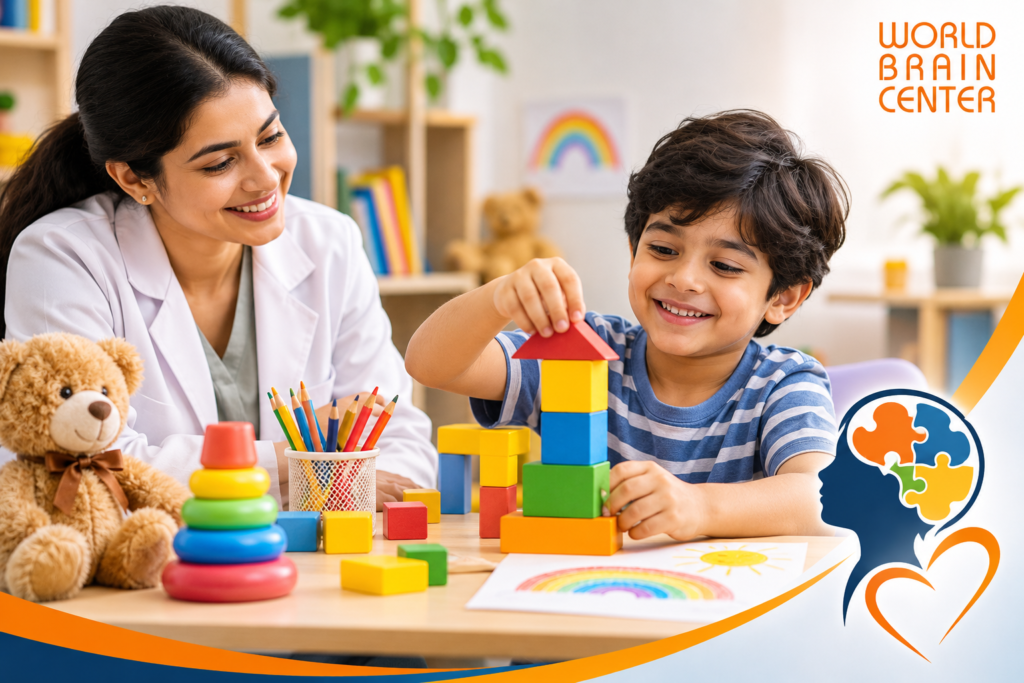
Play Therapy for Children: Understanding Their Emotions Through the Language of Play
Children do not always have the words to explain what they feel. Sometimes, a child who is struggling with anxiety, fear, sadness, anger, or an uncomfortable experience may not know how to communicate what is happening inside their mind. Instead, these feelings may appear through changes in behaviour, withdrawal, frequent crying, aggression, sleep difficulties, or problems interacting with others.
This is where play therapy for children can make a meaningful difference.
For children, playing is much more than entertainment. It is a natural way of exploring the world, expressing emotions, developing relationships, and understanding experiences. Through toys, drawing, storytelling, puppets, role-playing, and creative activities, trained child therapists help children communicate feelings that they may find difficult to express through ordinary conversations.
At World Brain Center Hospital, we understand that every child has a different personality, emotional needs, and developmental journey. Our approach to child mental healthcare focuses on understanding the individual child rather than simply correcting their behaviour.
Whether a child is experiencing anxiety, emotional difficulties, behavioural concerns, developmental challenges, or the effects of a traumatic experience, appropriate psychological support can help them develop healthier ways to understand and manage their emotions.
Let’s understand how play therapy works, who can benefit from it, and why professional guidance matters for a child’s emotional development.
What Is Play Therapy for Children?
Play therapy is a structured form of psychological intervention in which a trained therapist uses play-based activities to help children explore their emotions, experiences, thoughts, and behavioural patterns.
Unlike adults, who can often explain their concerns through conversation, young children may communicate more comfortably through activities.
For example:
- A child may use dolls to express feelings about family relationships.
- Drawing may help a child communicate fears or uncomfortable experiences.
- Storytelling may reveal worries about school, friendships, or separation.
- Role-playing may help children practise handling difficult social situations.
- Creative activities may encourage emotional expression and self-confidence.
The therapist observes these interactions and uses appropriate therapeutic techniques to support the child’s emotional and psychological development.
Play therapy is not simply allowing children to play. It is a purposeful therapeutic process guided by a trained professional.
How Does Play Therapy Work?
The success of play therapy depends on creating an environment where children feel comfortable, accepted, and understood.
A child should never feel pressured to explain everything immediately. Instead, the therapist builds trust and allows communication to develop naturally.
The process generally involves the following elements.
1. Creating a Safe and Comfortable Environment
Children are more likely to express themselves when they feel secure.
A play therapy setting provides age-appropriate toys, drawing materials, creative activities, and other resources that encourage exploration.
The therapist maintains appropriate boundaries while ensuring that the child feels respected and accepted.
2. Understanding Behaviour Through Play
Children communicate in different ways. Some are expressive, while others may initially remain quiet or hesitant.
The therapist observes how the child interacts with toys, responds to activities, handles frustration, and communicates with others.
These observations are considered alongside clinical assessments and information from parents or caregivers.
3. Building Trust and Emotional Connection
A positive therapeutic relationship is essential.
Through empathy, patience, active listening, and consistent interaction, the therapist helps the child develop trust.
Once children feel comfortable, they may become more willing to explore difficult emotions and experiences.
4. Encouraging Emotional Expression
Sometimes children cannot explain why they feel angry, frightened, or upset.
Play activities offer an alternative way to communicate these experiences.
The therapist helps children identify their emotions and gradually develop healthier ways to express them.
5. Developing Healthy Coping Skills
As therapy progresses, children may learn to:
- Recognise different emotions.
- Express feelings appropriately.
- Manage frustration.
- Handle stressful situations.
- Develop problem-solving skills.
- Improve communication.
- Build confidence and independence.
The therapeutic approach is adjusted according to the child’s age, developmental level, and individual needs.
Different Types of Play Therapy for Children
Not every child responds to the same therapeutic approach. A qualified child psychologist selects techniques based on the child’s concerns, personality, developmental stage, and treatment goals.
1. Directive Play Therapy
In directive play therapy, the therapist takes an active role in selecting and guiding activities.
The activities are designed around specific therapeutic objectives, such as improving emotional expression, developing problem-solving skills, or managing anxiety.
2. Non-Directive Play Therapy
Non-directive play therapy gives children greater freedom to select their activities and decide how they want to engage.
The therapist provides a supportive environment without unnecessarily directing the child’s actions.
This approach allows children to communicate at their own pace.
3. Child-Centred Play Therapy
Child-centred play therapy is based on acceptance, empathy, and respect for the child’s individual experiences.
The child leads the play while the therapist provides appropriate support and boundaries.
It encourages emotional expression, self-understanding, and confidence.
4. Cognitive Behavioural Play Therapy
Cognitive Behavioural Therapy (CBT) principles can be adapted through play to suit a child’s developmental level.
The therapist may use games, stories, drawings, and role-playing to help children understand the relationship between their thoughts, feelings, and behaviours.
This approach may be useful for children experiencing anxiety, fears, and certain behavioural difficulties.
5. Group Play Therapy
Group play therapy involves two or more children participating in structured activities under professional supervision.
It can provide opportunities to practise:
- Communication.
- Sharing and cooperation.
- Turn-taking.
- Social interaction.
- Conflict resolution.
- Understanding other people’s feelings.
6. Gestalt Play Therapy
Gestalt play therapy focuses on helping children become more aware of their feelings, experiences, and responses in the present moment.
Creative activities, storytelling, and imaginative play may be used to encourage self-expression and emotional awareness.
7. Filial Play Therapy
Filial play therapy involves parents or caregivers as active participants in the therapeutic process.
Under professional guidance, parents learn specific play-based skills that help them understand and respond more sensitively to their child’s emotional needs.
This approach can strengthen parent-child relationships and improve communication at home.
Which Childhood Conditions Can Benefit from Play Therapy?
Play therapy can support children experiencing a range of emotional, behavioural, and developmental difficulties.
However, the suitability of this approach depends on the child’s clinical needs. It may be used independently for selected concerns or alongside other psychological and medical treatments.
1. Anxiety and Childhood Fears
Children may experience anxiety related to school, examinations, separation from parents, social interactions, or unfamiliar situations.
Play-based activities can help them communicate their worries, understand their emotional responses, and practise coping strategies.
2. Behavioural Difficulties
Frequent anger, aggression, emotional outbursts, defiance, and difficulty following instructions can sometimes indicate underlying emotional or developmental concerns.
Play therapy may help children understand their feelings and develop more appropriate behavioural responses.
3. Trauma and Post-Traumatic Stress
Children who have experienced abuse, accidents, violence, loss, or other traumatic events may struggle to communicate their experiences.
A sensitive, trauma-informed therapeutic approach can provide opportunities for emotional expression and support recovery.
Children should never be forced to recreate or discuss traumatic experiences during play.
4. Depression and Emotional Withdrawal
Childhood depression may present differently from adult depression.
Some children become withdrawn, lose interest in activities, experience irritability, or struggle with friendships and schoolwork.
Play-based interventions may support emotional communication and engagement as part of a comprehensive treatment plan.
5. Autism Spectrum Disorder (ASD)
Children with autism may experience differences in social communication, interaction, sensory processing, and behaviour.
Developmentally appropriate play-based interventions can support communication, shared attention, social interaction, and learning through structured activities.
However, play therapy is not a cure for autism. Individualized developmental and behavioural support is important.
Parents looking for the Best Autism Doctors Delhi should seek professionals who can provide comprehensive assessment and individualized care.
6. Attention-Deficit/Hyperactivity Disorder (ADHD)
Children with ADHD may experience difficulties with attention, impulse control, emotional regulation, and classroom behaviour.
Play-based activities can help practise turn-taking, following instructions, managing frustration, and developing social skills.
Play therapy may complement other recommended ADHD interventions.
7. Emotional Challenges During Long-Term Medical Treatment
Repeated hospital visits, medical procedures, and chronic health conditions can create emotional stress for children.
Age-appropriate play activities may help them communicate their fears, understand medical experiences, and feel more comfortable during treatment.
What Are the Benefits of Play Therapy for Children?
When appropriately selected and delivered by trained professionals, play-based psychological interventions can support several aspects of childhood development.
Better Emotional Expression
Children learn to recognise and communicate feelings instead of expressing every emotion through crying, withdrawal, or behavioural outbursts.
Improved Self-Confidence
Making choices, completing activities, and exploring new experiences can help children develop a stronger sense of confidence and competence.
Stronger Social Skills
Group activities and guided interactions provide opportunities to practise cooperation, communication, sharing, and understanding social cues.
Better Emotional Regulation
Children may gradually learn to manage frustration, disappointment, fear, and anger through developmentally appropriate strategies.
Improved Parent-Child Relationships
Parent-involved approaches can help caregivers understand their child’s emotional needs and respond with greater patience and sensitivity.
Development of Problem-Solving Skills
Games, storytelling, and role-playing can help children explore different situations and practise constructive ways of responding to challenges.
What Happens During a Play Therapy Session?
Parents often wonder what their child will actually experience during a play therapy appointment.
The process is personalized, but a typical treatment journey may involve the following steps.
Initial Assessment: The therapist discusses the child’s developmental history, behaviour, emotional concerns, family environment, and relevant medical information with parents or caregivers.
Identifying Treatment Goals: The therapist identifies the areas requiring support, such as anxiety, communication, emotional regulation, or social interaction.
Play-Based Activities: The child participates in age-appropriate activities such as drawing, storytelling, imaginative play, games, or role-playing.
Therapeutic Observation: The therapist observes communication, emotional responses, interactions, and behaviour within the therapeutic setting.
Parent Guidance: Depending on the approach, parents may receive feedback, practical recommendations, or opportunities to participate in selected activities.
Progress Review: The therapist reviews the child’s progress and adjusts the intervention according to their changing needs.
Session duration and frequency vary depending on the child’s age, clinical concerns, and treatment plan.
How Parents Can Support Their Child During Play Therapy
Parents play an important role in supporting their child’s emotional development.
A few simple practices can make a meaningful difference:
- Listen patiently when your child wants to talk.
- Avoid criticizing or comparing your child with others.
- Encourage creative activities and imaginative play.
- Maintain consistent daily routines.
- Appreciate small improvements.
- Avoid forcing children to discuss uncomfortable experiences.
- Follow the therapist’s recommendations.
- Maintain open communication with the treating professional.
Most importantly, remember that every child develops at their own pace. Progress should be measured against the child’s individual needs rather than comparisons with other children.
Why Choose World Brain Center Hospital for Child Mental Healthcare?
Choosing the right mental healthcare professional is an important decision for every parent.
At World Brain Center Hospital, we believe children’s emotional and psychological concerns deserve the same attention, understanding, and professional care as their physical health.
Our multidisciplinary mental healthcare approach focuses on understanding the underlying reasons behind a child’s difficulties and recommending appropriate support.
Our child mental healthcare services include:
- Child and Adolescent Psychiatric Consultation.
- Psychological Assessment.
- Child Counselling.
- Behavioural Assessment and Support.
- Play-Based Psychological Interventions, where clinically appropriate.
- Anxiety and Depression Management.
- ADHD Assessment and Support.
- Autism Assessment and Developmental Guidance.
- Emotional and Behavioural Counselling.
- Parent and Family Counselling.
- Psychological Therapy.
Parents looking for the Best Child Psychiatrist in Delhi, Best Psychologist in Delhi, or specialized guidance for childhood behavioural and developmental concerns can consult our mental healthcare team to understand suitable assessment and treatment options.
We recognize that behind every behavioural concern is a child who needs understanding, patience, and appropriate support.
Give Your Child the Support to Express, Connect and Grow
A child’s inability to explain their emotions does not mean those emotions are unimportant.
Sometimes, a drawing, a story, a favourite toy, or an imaginative game can open the door to understanding what a child is experiencing.
Play therapy offers a developmentally appropriate way to support children as they understand their emotions, strengthen communication, and develop healthier coping skills.
If you have noticed persistent behavioural changes, emotional difficulties, communication concerns, or developmental challenges in your child, consider seeking professional guidance.
At World Brain Center Hospital, our team is committed to supporting children and families through compassionate, individualized, and evidence-based mental healthcare.
Every child deserves to feel heard, understood, and supported.
Contact World Brain Center Hospital
Hospital: World Brain Center Hospital, Delhi
Phone: 011-41643347
Mobile: 9968788861 | 9968788865 | 9968788867
Contact our team to enquire about child psychological assessment, counselling, and appropriate mental healthcare services.
Frequently Asked Questions (FAQs)
1. What is play therapy, and how does it help children?
Play therapy is a structured psychological intervention in which trained therapists use toys, drawing, storytelling, games, and imaginative activities to help children express emotions and work through behavioural or psychological difficulties. It can support emotional regulation, communication, confidence, and social development.
2. At what age can a child benefit from play therapy?
Play therapy is commonly used with young children, particularly those between 3 and 12 years of age. However, its suitability depends on the child’s developmental level, communication abilities, and individual concerns. Certain play-based techniques may also be adapted for older children and adolescents.
3. Can play therapy help children with autism, ADHD, anxiety, or trauma?
Play-based interventions may support children with autism, ADHD, anxiety, and trauma-related difficulties by encouraging communication, emotional expression, social interaction, and coping skills. However, treatment should be individualized and may need to be combined with other evidence-based interventions.
4. How can I find the right child psychiatrist or psychologist in Delhi?
Look for qualified professionals with relevant experience in child and adolescent mental health, psychological assessment, and age-appropriate therapeutic approaches. At World Brain Center Hospital, parents can enquire about child psychiatric consultations, psychological assessments, and suitable counselling or therapy options.
Medical Disclaimer
This article is intended for general educational and mental health awareness purposes. It does not replace professional medical advice, psychological assessment, diagnosis, or treatment. Play therapy may not be suitable for every child, and treatment outcomes vary depending on individual circumstances. Parents should consult a qualified child mental health professional if they notice persistent emotional, behavioural, developmental, or psychological concerns in their child.
